Exploring Dietary Frameworks
A systematic overview of established nutritional principles and conceptual frameworks studied in food science and public health research. Presented as phenomena and areas of inquiry, not as instruction.
Understanding Dietary Frameworks as Areas of Study
A dietary framework is a structured conceptual model used in nutritional science and public health to describe patterns of food consumption at the population or cultural level. These frameworks are developed through observation, research, and historical documentation. They represent ways of organizing understanding about how groups of people relate to food, rather than prescriptive instructions for individuals.
The frameworks described on this page have been the subject of scientific research, historical analysis, and cross-cultural study. They are presented here in that scholarly spirit: as documented phenomena that illuminate the diversity of human dietary organization and the principles that researchers have identified within them.
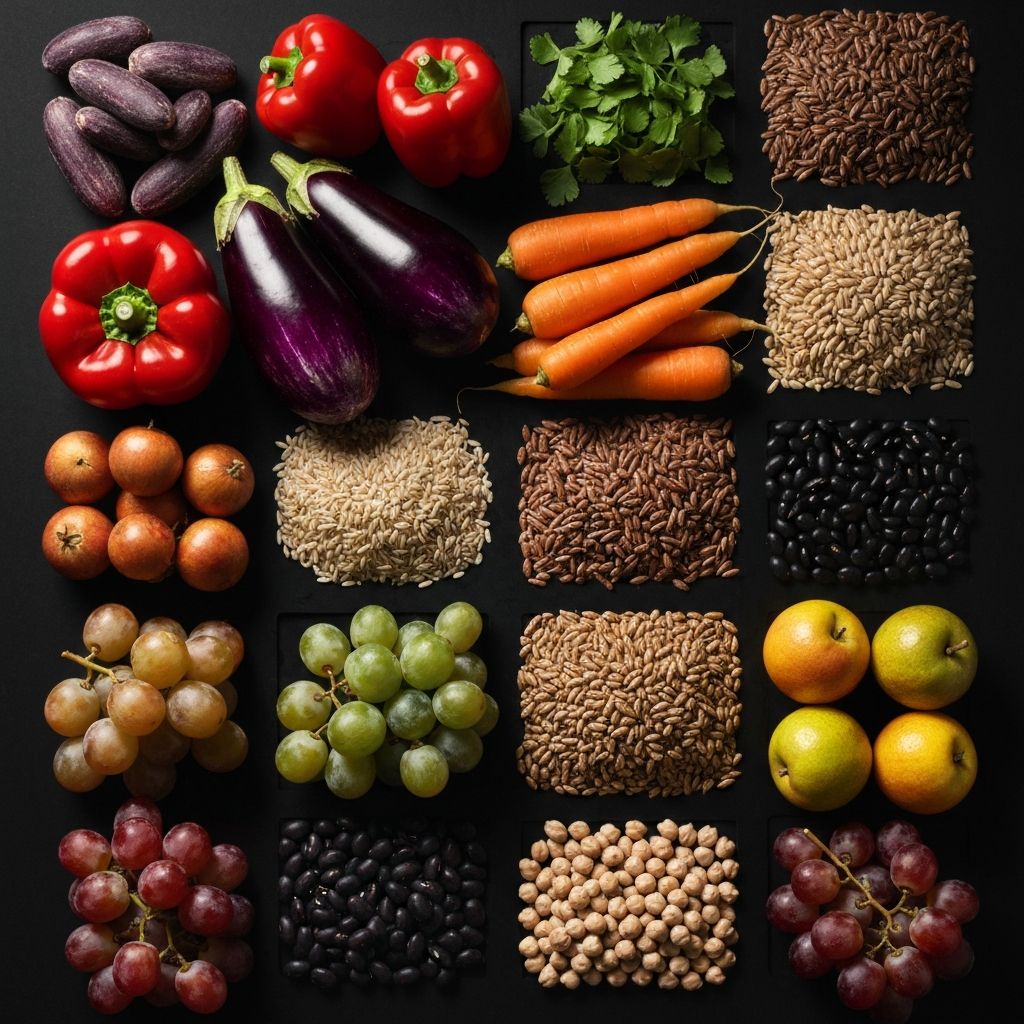
Conceptual Overview Matrix
The table below presents a comparative view of core dietary frameworks documented in nutritional science literature, outlining their principal characteristics and the research contexts in which they have been studied.
| Framework | Primary Focus | Key Food Categories | Research Context | Historical Origin |
|---|---|---|---|---|
| Principle of Moderation | Quantity and proportion management across all food types | All food categories, no single emphasis | General nutritional education; behavioral eating research | Documented across ancient Greek, Chinese, and Ayurvedic traditions |
| Dietary Variety Principle | Breadth of food selection across and within food groups | All food groups; emphasis on diversity of species and types | Micronutrient adequacy research; population diet assessments | Formalized in mid-20th century public health nutrition frameworks |
| Whole Foods Principle | Minimal processing; preservation of natural food composition | Unprocessed or minimally processed plant and animal foods | Food processing research; chronic disease epidemiology | Associated with 19th-century natural hygiene movements; revived in late 20th century |
| Seasonal Eating | Alignment of consumption with local agricultural cycles | Locally grown produce; seasonal fruits and vegetables | Food system sustainability; traditional ecological knowledge | Foundational to pre-industrial food systems globally |
| Plant-Forward Frameworks | Emphasis on plant-based foods as the dietary foundation | Vegetables, fruits, legumes, grains, nuts, seeds | Cardiovascular and metabolic research; environmental food systems studies | Observed in Mediterranean, East Asian, and Latin American traditional diets |
| Traditional Mediterranean Pattern | Olive oil-centered; high plant food diversity; moderate fish intake | Vegetables, legumes, whole grains, olive oil, fish, limited dairy | Among the most extensively researched dietary patterns in epidemiology | Documented in Southern European and North African populations over centuries |
| Traditional East Asian Pattern | Rice and vegetable-centered; fermented foods; minimal dairy | Rice, vegetables, soy products, seafood, fermented foods | Longevity research; gut microbiome studies; cross-cultural nutritional comparison | Documented over millennia in Chinese, Japanese, and Korean culinary history |
| Latin American Indigenous Frameworks | Corn-bean-squash triad; diverse indigenous plants | Corn, beans, squash, quinoa, amaranth, native fruits and roots | Food sovereignty research; indigenous nutritional anthropology | Mesoamerican and Andean agricultural traditions dating to pre-Columbian era |
Framework Descriptions
Each framework below is described according to its constituent principles, the populations or traditions in which it has been observed, and the research areas in which it has been studied.
The Principle of Moderation
Moderation as a dietary concept appears across numerous ancient philosophical and medical traditions, from Hippocratic writings to Confucian texts and Ayurvedic classical works. In contemporary nutritional science, it is described as the principle of avoiding extremes in dietary intake—neither over-consuming nor severely restricting any particular food category. Research in behavioral nutrition has explored how moderation operates as a cognitive and behavioral construct, examining how individuals interpret and apply the concept in practice.
- Described in ancient Greek texts as central to physical well-being
- Featured prominently in most government dietary guidelines globally
- Studied in behavioral nutrition as a self-regulatory concept
- Does not prescribe specific quantities but rather proportional awareness
Dietary Variety and Nutrient Diversity
The variety principle is grounded in the observation that different foods provide different nutrient profiles, and that a diet drawing from a wide range of food types is more likely to supply the full spectrum of essential nutrients than one restricted to a narrow selection. This concept is operationalized in dietary assessment tools such as dietary diversity scores, used by international organizations to evaluate population-level nutritional adequacy. In food anthropology, dietary variety is also discussed as a cultural characteristic, with traditional food systems often featuring hundreds of distinct species consumed across a year.
- Formalized in mid-20th century dietary guideline frameworks
- Measured through dietary diversity indices in nutritional epidemiology
- Associated with broader micronutrient coverage in population studies
- Observed as a characteristic of diverse traditional food systems
Whole Foods Principle
The whole foods concept describes an orientation toward foods that have been minimally altered from their natural state. The underlying rationale explored in food science is that the complex matrix of nutrients, fiber, and phytochemicals present in whole foods may interact in ways not fully replicated by isolated nutrients. Food processing research, including the development of the NOVA classification system by researchers at the University of São Paulo, has contributed a more structured vocabulary to this discussion, distinguishing between levels of industrial processing and their implications for food composition.
- Conceptually associated with 19th-century natural food reform movements
- Given renewed scientific attention through food processing research in the 2000s
- Central to the NOVA food classification framework
- Discussed in relation to dietary fiber content and food matrix effects
Seasonal Eating Traditions
Seasonal eating describes patterns of food consumption aligned with the natural growing cycles of a geographic region. Prior to industrialization and global food distribution networks, seasonal eating was the default condition of human nutrition. Food anthropologists and food historians have documented how seasonal cycles shaped traditional culinary calendars, with distinct foods, preparations, and social rituals associated with each season. In contemporary food systems discussions, seasonal eating intersects with questions of food transport, storage, and the energy costs of year-round availability of out-of-season produce.
- Foundational to pre-industrial food systems on all inhabited continents
- Documented in traditional culinary calendars and agricultural heritage records
- Discussed in food systems research in relation to environmental sustainability
- Observed in Chilean food culture through native seasonal produce cycles
Plant-Forward Dietary Frameworks
Plant-forward dietary frameworks are characterized by a proportionally higher contribution of plant-derived foods to total dietary intake, without necessarily excluding animal products entirely. This category includes the Mediterranean dietary pattern, traditional East Asian eating patterns, and numerous indigenous dietary traditions from Latin America, Africa, and South Asia. Research interest in plant-forward patterns has grown substantially in the early 21st century, with epidemiological studies examining associations between dietary patterns and various health indicators across large population cohorts. The nutritional rationale explored in research centers on the fiber content, micronutrient density, and phytochemical diversity associated with plant foods.
- Observed across Mediterranean, East Asian, and Latin American food cultures
- Subject of extensive epidemiological research since the late 20th century
- Associated with dietary fiber and micronutrient density in nutritional analyses
- Discussed in environmental food systems research in relation to land and water use
Evolution of Dietary Guidelines Globally
National dietary guidelines represent a formal mechanism through which governments translate nutritional science into public communication. The history of dietary guidelines reflects the evolution of nutritional science itself: early 20th-century guidelines focused primarily on preventing nutrient deficiency diseases. By the latter half of the century, the focus shifted toward chronic disease risk and dietary pattern composition. Contemporary guidelines increasingly acknowledge the role of food systems, sustainability, and cultural context alongside purely physiological nutritional needs. The FAO and WHO have both published guidance documents on dietary guidelines development, and comparative analysis of guidelines across countries reveals both shared principles and significant regional variations.
- First formal national dietary guidelines published in the early 20th century
- Evolved from deficiency prevention to chronic disease and dietary pattern focus
- Subject to ongoing revision as nutritional evidence accumulates
- Studied comparatively across countries by international nutritional organizations